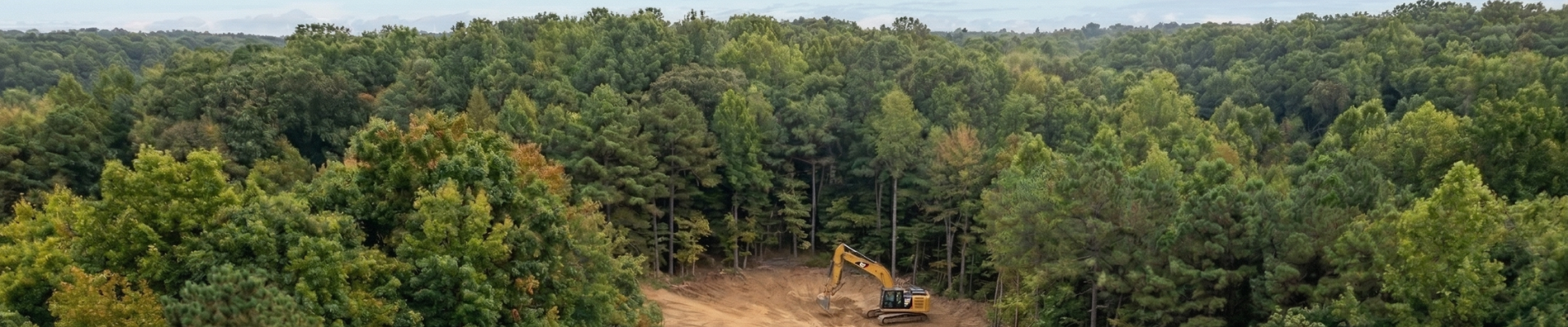

Greenfield highway projects often begin with limited or inconsistent terrain and environmental information. When the baseline data isn’t clear, early planning decisions carry more risk, potentially leading to alignment changes, additional field work, and costly revisions later in the project.
RPM helps reduce that uncertainty by providing rapid, large-area mapping using aerial LiDAR and photogrammetry. Together, these technologies deliver highly accurate terrain models and detailed imagery that establish a reliable baseline for corridor planning and environmental review.
With clearer information at the earliest stages of a project, teams can evaluate route options more confidently, identify constraints sooner, and move into engineering and consultation with stronger documentation already in place.
How RPM Supports Corridor Planning
- High-resolution terrain and elevation models for comparing route options and corridor alternatives
- Aerial LiDAR and photogrammetry mapping to capture both accurate elevation data and detailed surface imagery
- Baseline mapping of drainage patterns, watercourses, and environmental features
- Identification of constraints such as wetlands, steep slopes, and potential crossing locations
- Support for early-stage engineering, feasibility, and corridor selection studies
- Reduced uncertainty and fewer repeat field mobilizations before detailed design begins
- Defensible mapping outputs to support permitting, consultation, and regulatory approvals

FAQ
Welcome to FAQs
Please select a frequently asked question from the menu below.
Why combine aerial LiDAR and photogrammetry?
These technologies create a more reliable and complete foundation for decision-making. LiDAR delivers precise terrain data and elevation models. Photogrammetry complements this by adding rich, high-resolution imagery that provides visual context, helping teams better understand surface conditions and site details.
By integrating both, clients gain not just data, but a clearer, more confident view of their project from every angle.
How does this help reduce project risk?
By establishing a reliable baseline early, RPM helps teams identify potential issues sooner, reduce uncertainty in route evaluation, and avoid costly rework or design changes later in the project.
Because we rely on remotely sensed technologies like LiDAR and photogrammetry, much of this insight is gathered without placing crews on the ground. This reduces costs and accelerates early-stage planning while significantly improving safety.
Does RPM data support environmental review and consultation?
Yes. RPM provides defensible mapping outputs that can support environmental review, stakeholder consultation, permitting, and regulatory approval processes.
How does RPM reduce repeat field mobilizations?
By capturing much higher-density data than traditional GNSS surveys, RPM’s LiDAR solutions (both Mobile Mapping and RPAS) produce detailed, high-resolution and accurate models with minimal interpolation.
Lower-density surveys rely on assumptions between points, which can lead to missed grade changes, drainage issues, or construction challenges. Higher-density data removes that guesswork by capturing those details upfront.
The result is fewer surprises, more confident early decisions, and less need for additional field visits to verify or correct conditions.
What outputs does RPM deliver, and will they integrate with our workflows?
For highways and transportation projects, RPM delivers bare earth and full-feature point clouds (tiled to client specifications), DEMs, contours, and high resolution orthophotos. All outputs are structured for seamless integration into common GIS and engineering platforms. We align formats and feature requirements upfront to ensure the final deliverables fit directly into your workflows without additional conversion or rework.
Contact us for a consultation: