
A Structured Approach to Understanding, Managing, and Reducing Water Loss
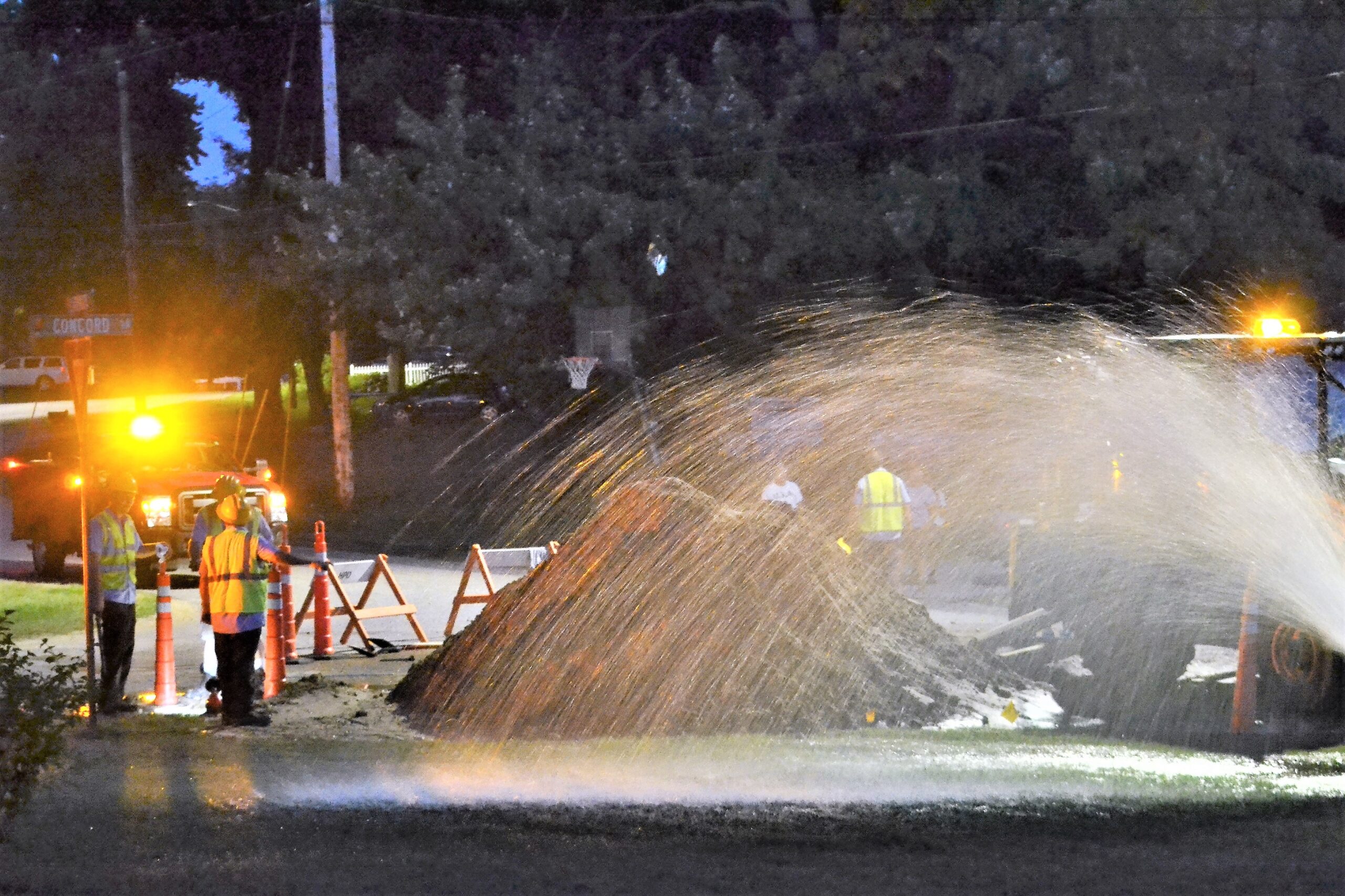
Municipal water systems are among the most valuable assets a community owns. From treatment and pumping to storage and distribution, they represent significant long-term financial and operational investments. Yet many municipalities lack a clear, defensible understanding of how much water they should be producing relative to actual demand. In periods of drought, seasonal fluctuation, or system stress, water optimization becomes more than a financial concern. It becomes a matter of resource protection and long-term sustainability. Unmanaged water loss can lead to the depletion of treated supply, increased treatment and pumping costs, accelerated infrastructure wear, reduced emergency and fire-flow resilience, and upward pressure on water rates. While most municipalities track how much water they produce, far fewer have the tools or benchmarks needed to determine whether increased production reflects growth, inefficiency, or system loss.
A Three-Step Approach
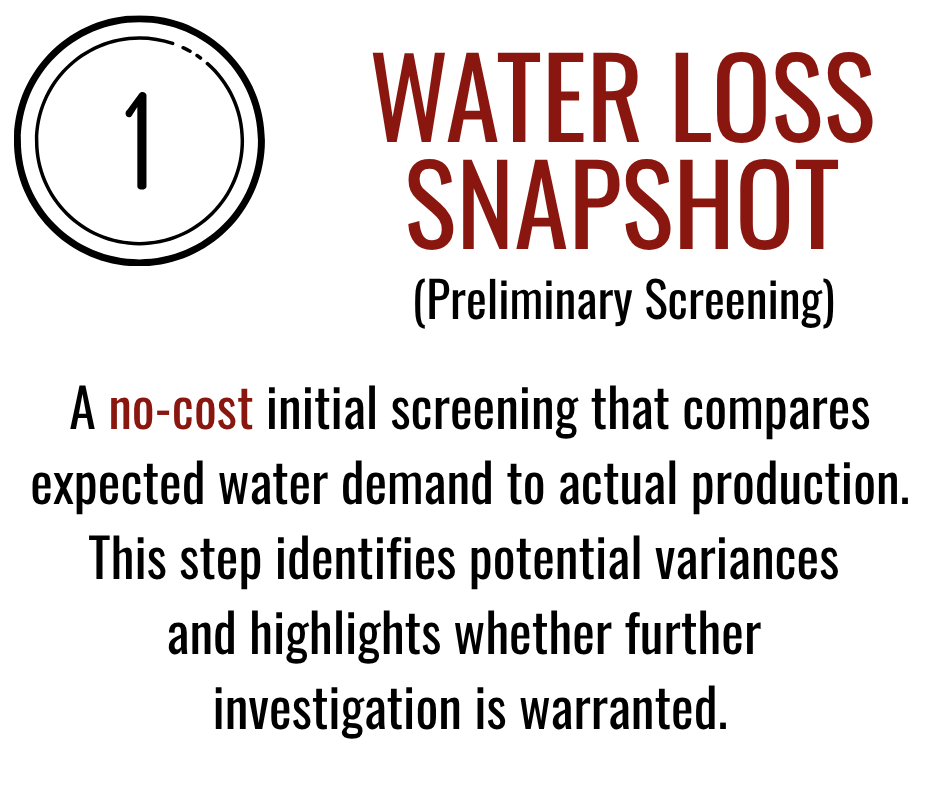
RPM’s Municipal Water Optimization Program is designed to bring clarity to that uncertainty through a structured, scalable framework. The program can be implemented in full or tailored to meet the needs of each municipality.
Click below to find out more about each approach:
Flexible Implementation & Long-Term Value
Scalable Implementation
While the program follows a structured framework, it is not rigid. Municipalities can move through each component sequentially or take a more targeted approach depending on their specific circumstances and priorities.
Following the Water Loss Snapshot, municipalities may choose to:
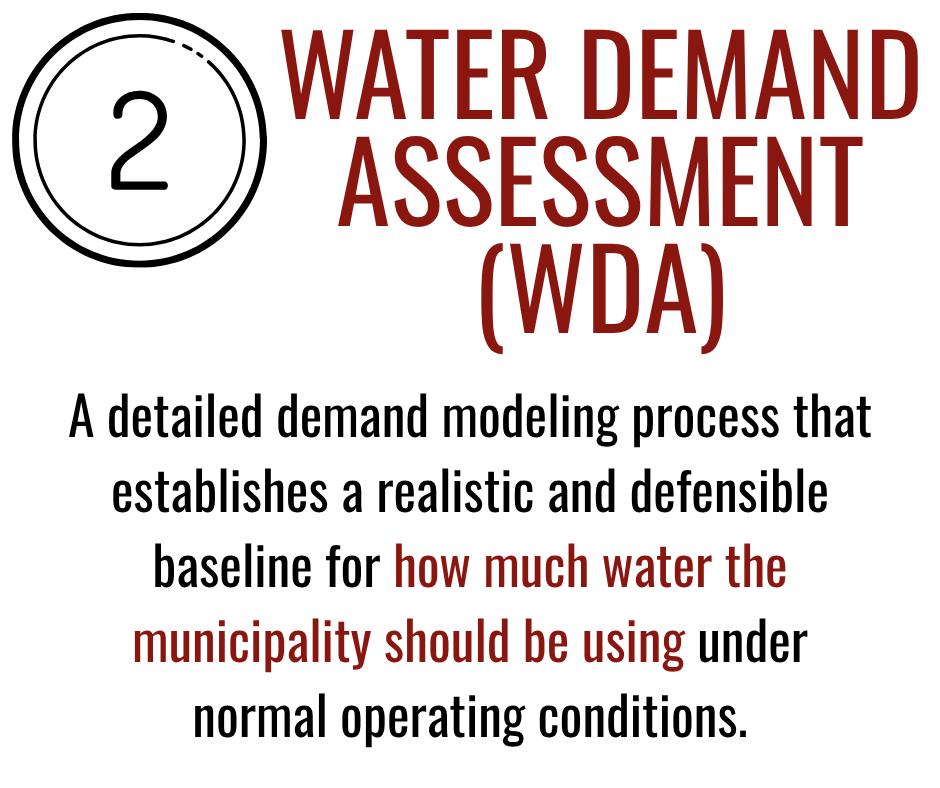
Proceed with a full Water Demand Assessment (WDA)
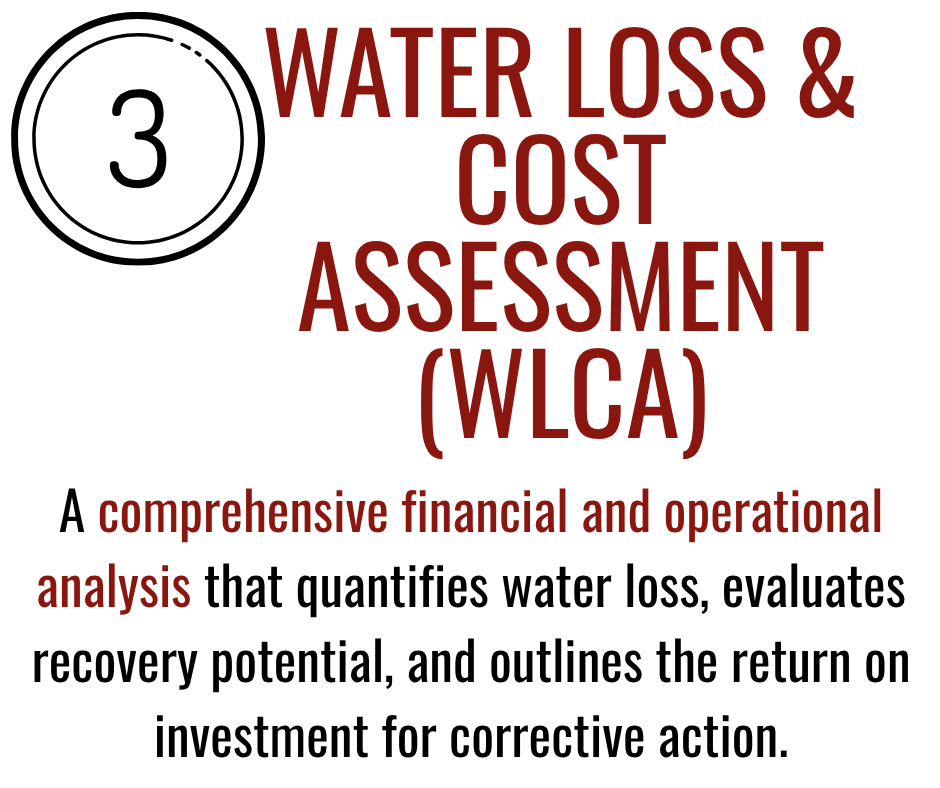
Move directly into a Water Loss & Cost Assessment (WLCA)
Advance into a structured leak detection and field investigation
Stabalize know system losses first and normalize demand afterward
The appropriate path forward is influenced by several factors, including:
Available budget and internal capacity
Severity of identified variance
Confidence in existing demand assumptions
Urgency related to drought or supply constraints
Capital planning timelines and priorities
This flexibility ensures the program can adapt to both immediate operational needs and longer-term strategic planning.
Resource Protection & Financial Stewardship
The value of water optimization extends beyond financial return. In many cases, particularly during periods of supply stress or drought, the priority shifts toward protecting critical water resources and maintaining system reliability.
This program supports:
Protection of reservoir and aquifer levels
Preservation of treated water capacity
Maintenance of emergency and fire-flow reliability
Reduction of treatment and system strain
In other contexts, financial exposure and cost recovery may be the primary driver. The program is designed to support both objectives, enabling municipalities to balance fiscal responsibily with long-term resource stewardship.
Strategic Outcome
The RPM Municipal Water Optimization Program provides municipalities with a clear, structured foundation for understanding and managing system performance. Through a combination of demand modeling, loss quantification, and financial analysis, it delivers:
Documented and defensible demand modeling
Transparent assumptions and methodology
Structured evaluation of system loss
Clear financial insight and recovery potential
Resource preservation awareness
Flexible implementation pathways
Structured water optimization strengthens governance, protects public assets, and supports long-term municipal sustainability.
This program gives municipalities the clarity and confidence to move forward with informed decisions based on:
Establish normalized water demand
Comparison of expected demand to actual production
Quantified potential system loss
Financial, operational and resource impact
Structured, defensible decision-making at council level
FAQs
Welcome to FAQs
Please select a frequently asked question from the menu below.
How much water should my municipality be using?
Because every community is unique, expected water usage depends on local demographics, commercial activity, and industry presence. RPM’s proprietary analysis tool cuts through that variability, helping municipalities benchmark their usage and uncover opportunities to improve efficiency and reduce waste.
What's the difference between daily system volume approach and minimum nighttime flow analysis?
Daily System Volume (DSV) looks at the total water used in a community over a full 24-hour period, making it a useful high-level metric for municipalities with SCADA systems or totalizers.
Minimum Nighttime Flow (MNF) takes a more targeted approach by measuring water use during the quietest overnight hours. Because it isolates periods of minimal demand, MNF often delivers a more accurate picture of leakage or unaccounted-for water.
Is the water usage as published by Stats Canada a realistic target?
The national average published by Statistics Canada reflects how much water municipalities are currently producing, but it includes system losses, inefficiencies, and unaccounted-for use. In other words, it’s an average of performance that is already compromised.
Using this number as a target means benchmarking against a level where water loss is built in. Rather than representing an optimal or efficient standard, it reflects the collective challenges municipalities are facing. Setting goals based on this average can unintentionally lock in inefficiencies instead of driving improvement.
How can RPM's Water Optimization Program help our municipality?
RPM’s Water Optimization Program gives municipalities a clear, structured way to understand how much water they should be using, where losses or inefficiencies exist, and what those issues are truly costing.
This flexible three-pronged approach begins with an initial snapshot and can extend to a detailed demand and loss analysis. RPM helps you identify hidden losses, quantify financial and resource impacts, and prioritize the most effective actions to improve system performance, protect water supply, and support long-term planning and sustainability.
How can this support budget planning, council decisions, and ROI for repairs?
RPM’s Water Loss & Cost Assessment provides a clear, data-driven breakdown of how much water your system should be producing versus what it currently produces, along with the financial and resource impact of any loss.
The assessment translates system performance into practical insight, quantifying the cost of water loss, estimating leak scenarios, and outlining the investment required to locate and repair issues, including expected return on investment. This gives municipal leaders and council a defensible, easy-to-understand foundation to support budgeting, prioritize capital planning, and make confident, strategic decisions.
Can this strengthen funding/grant applications with defensible numbers?
Yes. RPM’s analysis equips municipalities with clear, defensible data that funding providers look for; established demand benchmarks, quantified water loss, and a transparent breakdown of costs and expected outcomes.
By translating system issues into measurable financial impact and ROI, the program strengthens applications with credible justification for investment. This improves the likelihood of approval and helps reduce the financial barrier to addressing critical water system challenges.
Contact us for a consultation: